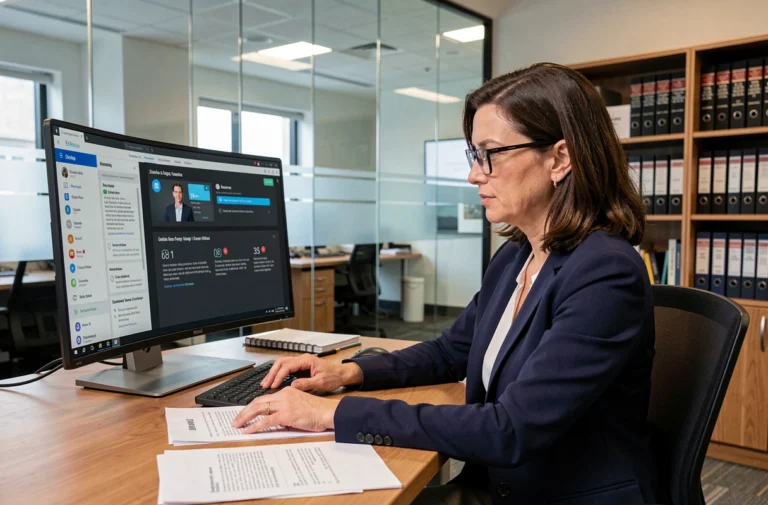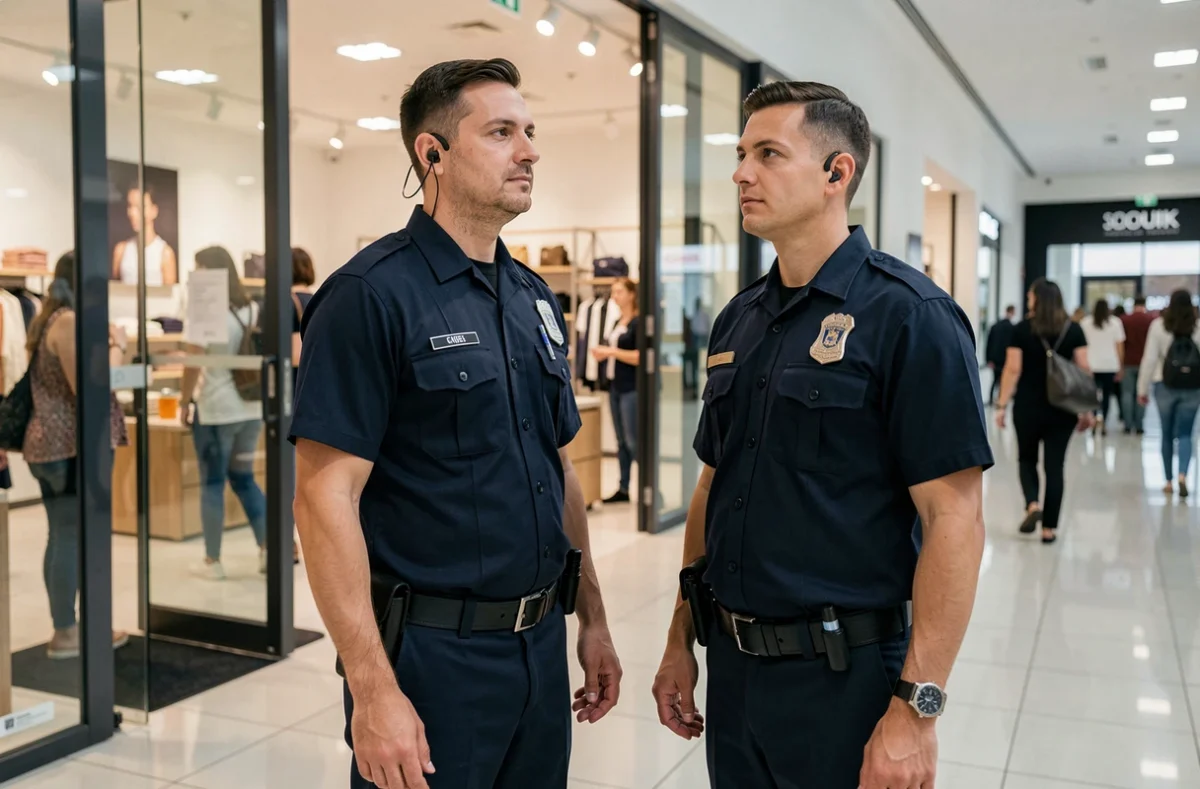
Preventing theft, reassuring customers, coordinating alerts with staff: a store security guard has responsibilities that go beyond simply acting as a visible deterrent. Assessing their real impact means distinguishing what they can do from what the law prohibits, and understanding how their coordination with retail teams makes a difference day to day.
Legal framework for store security guards: what they can and cannot do
The most common misconception concerns the guard’s actual powers. Unlike a police officer, a security guard has no authority to search. Article L. 613-2 of the French Internal Security Code authorizes a visual inspection of bags, but any physical search requires the owner’s explicit consent.
In the event of an offense caught in the act, an arrest falls under Article 73 of the French Code of Criminal Procedure, which applies to everyone and is not a power specific to the profession. The guard observes the incident, detains the person if necessary, and then hands them over to law enforcement.
| Action | Authorized | Legal basis |
|---|---|---|
| Visual inspection of a bag | Yes, with consent | Art. L. 613-2 CSI |
| Physical search of a bag | No, without consent | Art. L. 613-2 CSI |
| Arrest when caught in the act | Yes (like any citizen) | Art. 73 CPP |
| Unrestricted access to camera footage | No, restricted to authorized personnel | CNIL recommendations |
| Reassignment to checkout or restocking duties | No | Appendix I.6 of the collective agreement |
This table highlights a point many retailers are unaware of. Understanding the role of a store security guard helps prevent assigning them tasks outside their remit that could leave the business legally vulnerable in the event of a dispute.
Preventing theft without creating suspicion: coordination between the guard and sales team
A guard stationed at the entrance who stares down every customer creates an atmosphere of distrust. Retailers with the best prevention results rely on a discreet, coordinated approach in which the guard monitors the sales floor without taking the place of sales staff.
Appendix I.6 of the collective agreement for the private security industry specifies that a loss-prevention guard must not be reassigned to restocking or checkout assistance. Their role remains observation, reporting, and documenting incidents. This division of responsibilities is not a mere administrative detail: it ensures the guard remains focused on prevention.
In-store alert process
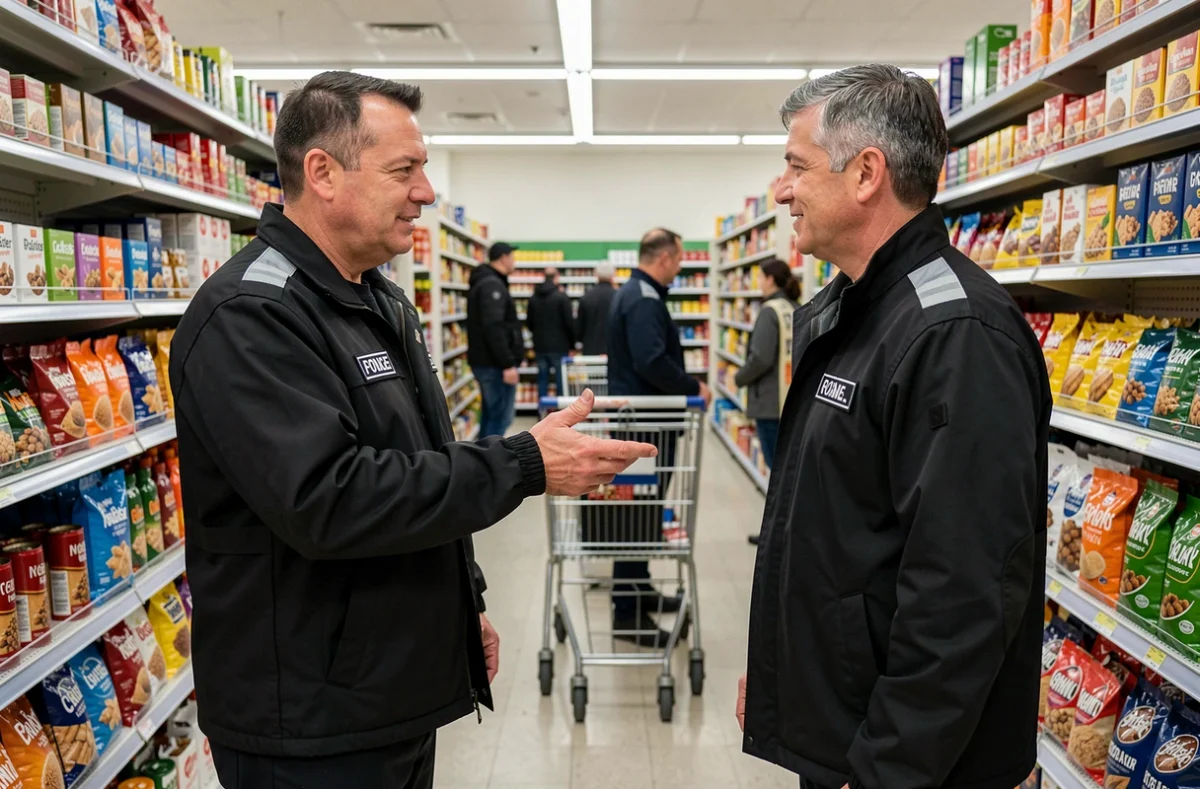
Prevention works when multiple roles communicate according to established procedures. The guard reports observations to the store manager, who decides what action to take. Sales staff, who interact directly with customers, also flag warning signs, such as unusual behavior or attempts to remove security tags.
- The guard on the sales floor spots and documents suspicious behavior without approaching the customer directly
- The store manager gathers reports and, if necessary, contacts law enforcement
- Sales staff provide proactive customer service that naturally deters theft by engaging with customers in high-risk areas
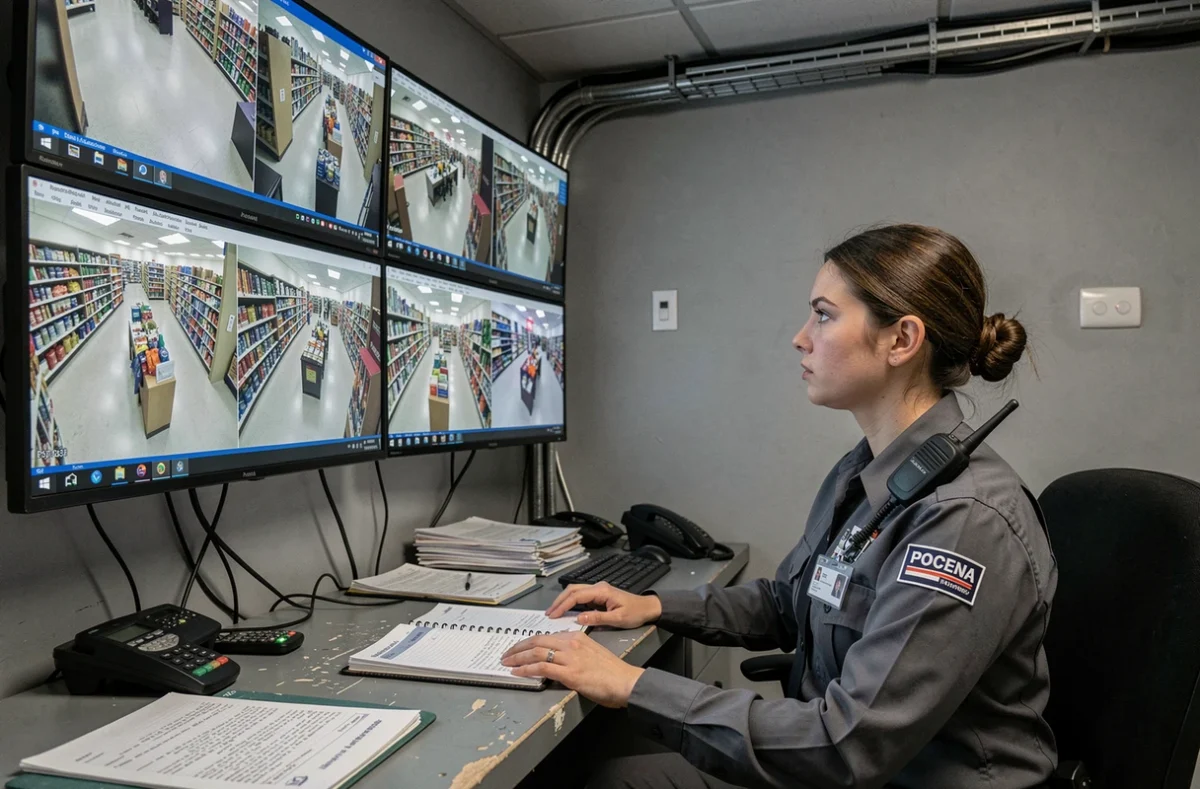
- When a video surveillance operator is on duty, they provide an additional real-time perspective
This network turns prevention into a team effort. An isolated guard without operational support is less effective because they cannot cover the entire sales floor alone.
Video surveillance in retail: access to footage and regulatory limits
Cameras provide reassurance, but their use is regulated. CNIL recommendations require that access to recordings be restricted to authorized personnel. A guard on the sales floor can report an incident without viewing the footage themselves, which remains the responsibility of a designated operator or the site manager.
Footage must be retained for a period proportionate to the purpose of the system. In practice, this means a few days to a few weeks, depending on the setup—not indefinite storage. This requirement means retailers must act quickly on incidents reported by the guard or risk losing the visual evidence.
How video surveillance affects the guard’s day-to-day work
A guard who knows an operator is monitoring the screens can adapt their patrol route. They focus on areas outside the camera’s field of view or blind spots where the cameras cannot capture anything. This combination of human and technical surveillance reduces uncovered areas without increasing staffing levels.
One point that is rarely discussed: video surveillance does not measure theft prevented. It records incidents, not deterrence. The preventive effect of a guard’s physical presence remains difficult to quantify using video data alone.
Measuring in-store theft: why the available data remains unreliable
Articles about retail security often cite dramatic figures on shoplifting. Reports filed with the authorities and responses gathered through surveys of retailers do not measure the same thing. An online survey of retailers is not a representative sample, and incidents reported to law enforcement do not cover every case.
This distinction matters when determining the right level of security. A retailer relying solely on official statistics is likely underestimating the problem. Another relying on self-reported surveys risks overestimating the threat and overspending on surveillance.
What this means when choosing a security guard
The lack of reliable measurements makes a qualitative approach all the more valuable. Rather than setting numerical targets for reducing theft, retailers can assess the quality of coordination between the guard, sales staff, and video surveillance system. One useful indicator is the number of incidents reported and handled under internal procedures, compared with the number of incidents that actually lead to law enforcement being called.
Protecting a store depends on a balance between a visible human presence, regulated technical systems, and internal coordination. The security guard is one link in this chain, not a standalone line of defense. Retailers that get the most out of having a guard are those that provide a clear scope of duties, designated operational contacts, and reporting procedures suited to their sales floor.