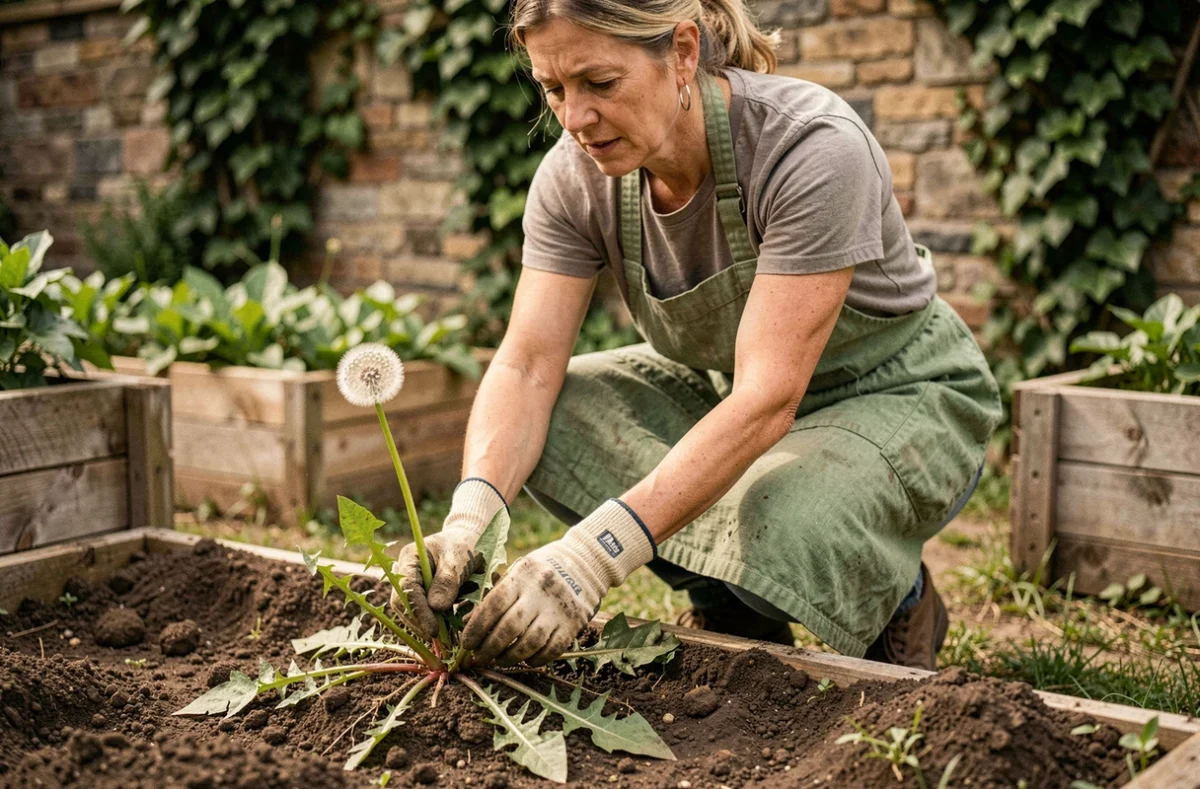
Fighting against weeds in a garden starts with choosing the right method for the right surface and the right type of weed. Since January 1, 2019, French individuals are no longer allowed to buy or use synthetic chemical pesticides. Only biocontrol products or those authorized in organic farming remain accessible. This regulatory framework profoundly changes the range of available solutions, and not all are equal depending on the situation.
Thermal weeding, manual weeding, or mulching: comparison by type of surface
The choice of a weeding method depends as much on the area to be treated as on the type of weed present. Here is a synthetic comparison based on available practical feedback.
| Method | Suitable surfaces | Effectiveness on established perennials | Frequency of use |
|---|---|---|---|
| Thermal weeding | Paths, gravel, paving joints | Low (does not reach roots well) | Several passes per season |
| Manual weeding (hoe, weeder) | Beds, vegetable garden, shrub bases | Good if soil is moist and roots are extracted | Regular, every 2 to 3 weeks |
| Organic mulching (straw, wood chips, leaves) | Beds, vegetable garden, hedge bases | Preventive, limits regrowth | Annual or biannual renewal |
| Weed control fabric | Slopes, hedges, spaced plantings | Very good for prevention | Durable (several years) |
| Pelargonic acid-based product | Terraces, yards, uncultivated areas | Low (contact action on foliage) | Repeated applications necessary |
This table highlights an often underestimated gap: thermal weeding and pelargonic acid do not reach deep roots. On a gravel path overrun with couch grass, a thermal weeder provides a quick visual result, but regrowth occurs within a few weeks.
Manual weeding remains the most reliable method for established perennials, provided that work is done on moist soil to extract the root system. By combining uprooting and mulching, we significantly reduce the weeding time for the following season. To delve deeper into the subject, gardening tips on Les Défricheurs detail several complementary approaches.
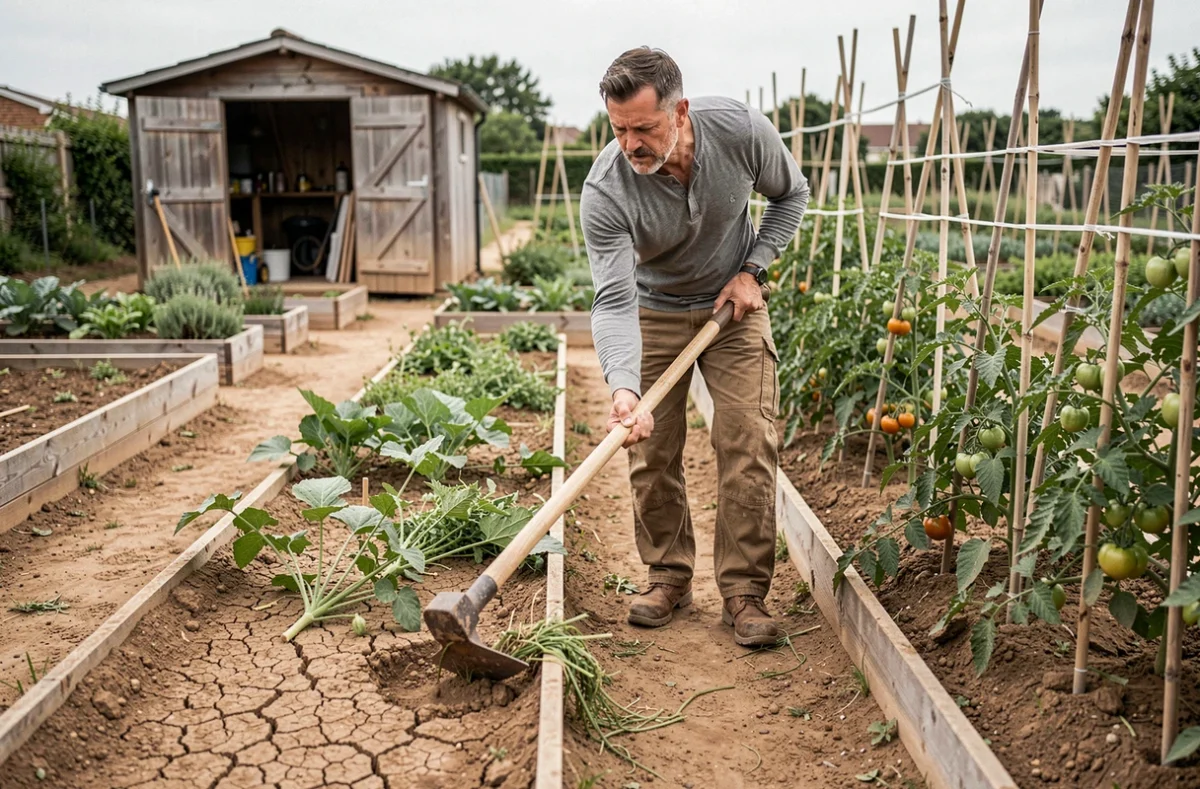
Pelargonic acid and authorized herbicides: what contact does not resolve
Since the ban on synthetic chemical products for individuals, pelargonic acid-based herbicides have occupied the shelves of garden centers. Their mode of action deserves to be understood before any purchase.
Pelargonic acid burns the aerial parts without reaching the roots. On an annual like chickweed, the effect may be sufficient. On a deeply rooted bindweed or dandelion, the foliage turns black and then the plant regrows from its root reserves.
This discrepancy between the immediate visual effect and the actual effectiveness explains why these products require repeated applications, with a cumulative cost that cannot be overlooked over a season. However, they remain useful for mineral areas (terrace joints, sidewalk edges) where weeds are young and not well-rooted.
Biocontrol products: limits to know
The “biocontrol” category encompasses very different products in terms of composition and effectiveness. A product authorized in organic farming is not necessarily without environmental impact. Pelargonic acid, for example, is a natural fatty acid, but its repeated application over large areas can affect soil microfauna.
The most coherent approach is to reserve these products for areas that cannot be mulched or manually weeded, and to prioritize preventive methods elsewhere.
Covering and false sowing: two underutilized techniques in the vegetable garden
Mulching is well known. Two other preventive techniques are much less so, yet they can drastically reduce weed pressure even before cultivation begins.
Covering in the vegetable garden
Covering consists of covering the soil with an opaque tarp for several weeks. Deprived of light, weed seeds germinate and then die due to lack of photosynthesis. This technique works particularly well at the end of winter, on a plot intended for spring sowing.
- Lay a black tarp or opaque woven fabric on bare soil, weighting it down with stones or stakes
- Leave in place for a minimum of four to six weeks for the germination-death cycle to complete
- Remove the tarp just before sowing or planting, without tilling the soil to avoid bringing new seeds to the surface
This method is particularly suitable for fallow plots or new vegetable garden areas.
False sowing to trap weeds
False sowing is based on a simple principle: prepare the soil as for sowing, wait for the weeds to sprout, then destroy them before sowing the desired crop. False sowing eliminates an entire generation of weed seeds on the surface.
A light pass with a rake or hoe is sufficient to eliminate young seedlings. The soil is then ready for the actual sowing, with significantly reduced weed pressure during the first weeks of crop growth.
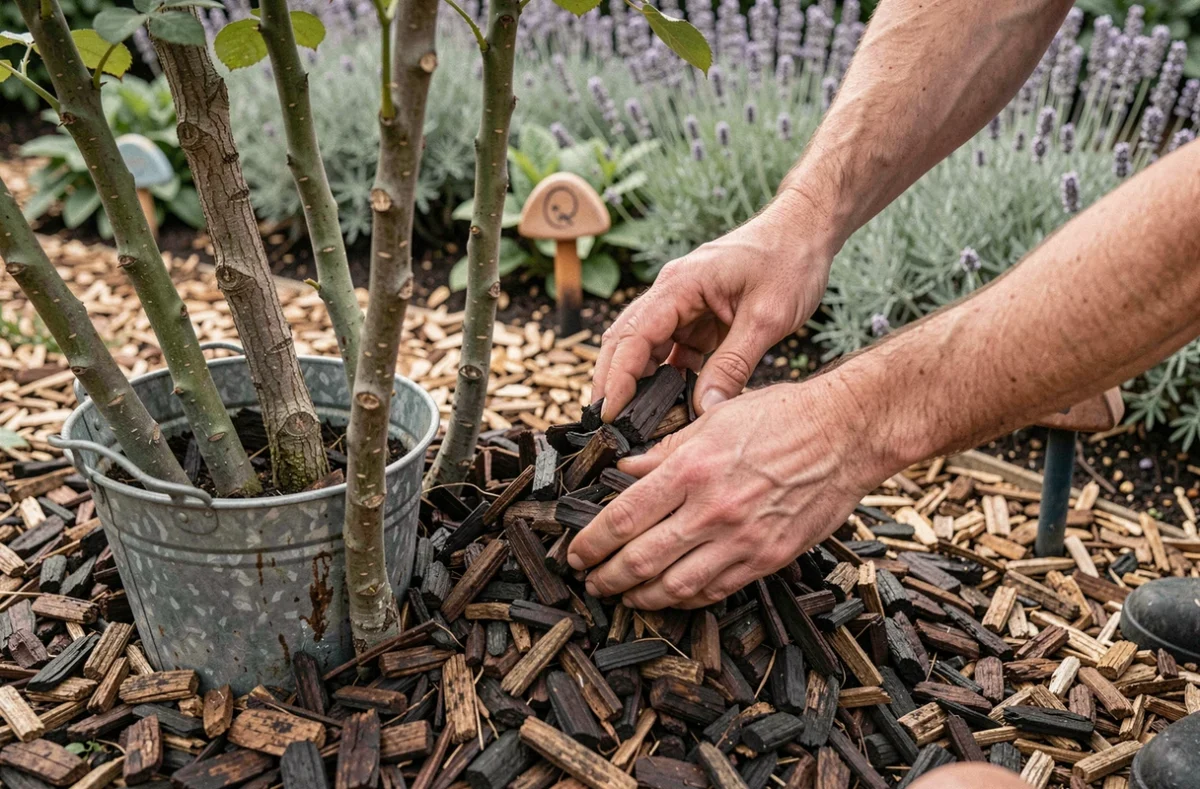
Bare soil and seed management: why the problem returns every year
Most gardeners treat weeds as a one-time problem. However, weeds are a symptom of exposed soil and a considerable seed bank in the top few centimeters of soil.
Weed seeds arrive via wind, birds, tools, shoes, and watering water. A bare soil will be covered with weeds in a few weeks, regardless of the quality of previous weeding.
- Systematically cover all uncultivated areas (mulching, green manure, ground cover plants)
- Avoid deep tilling, which brings dormant seeds to the surface
- Clean tools between plots to limit unintentional spreading
Shallow soil work (using a broadfork instead of a spade) helps preserve the natural stratification and does not reactivate the buried seed bank. This preventive logic reduces the time spent on weeding each year, whereas solely curative interventions maintain an endless cycle.
Sustainable weeding relies less on the choice of a miracle product than on the combination of preventive actions suited to each area of the garden. Permanent soil coverage remains the most effective lever to limit weed regrowth, season after season.