
In the corridors of companies, the hierarchy of programming languages is evolving at the speed of streaming. What was the standard yesterday sometimes doesn’t even have time to settle before new tools and cloud architectures shake things up and force decision-makers to revise their cascading strategies.
Artificial intelligence is now establishing itself as a central player, surpassing the status of mere curiosity to reconfigure entire professions, where humans once reigned supreme not long ago. In the face of an explosion in the number of attacks, cybersecurity can no longer be relegated to the end of a project: it must be woven into every step. Once reserved for a few pioneers, the DevSecOps approach is becoming mainstream, enhancing execution speed and rigor without sacrificing an ounce of security.
Why 2026 is shaping up to be a major turning point for computing
The year 2026 is already on the horizon and is bringing about a fundamental transformation. High-tech trends are infusing everywhere, from the steering committee to every connected user. From blockchain to augmented or virtual reality, all the classic frameworks for managing and circulating data are being reinvented. Internal industrial networks are being equipped with smart sensors, multiplying exchanges with remote data centers and strengthening cloud infrastructure. Moreover, cybersecurity is no longer an “add-on”; it is a foundation, a pillar that conditions everything else.
IT departments are on the lookout and are accelerating the adoption of innovative solutions for greater agility, increased resilience, and ever-stricter compliance. Mastering the cloud ecosystem is no longer an improvised option: hybrid architectures, which combine local storage and cloud, are becoming essential, as long as security and data governance are solidly integrated at the core of the operation.
The race for technological innovation is on. Organizations are striving to remain competitive while maintaining control over risks and protecting strategic resources. For an overview of the strategies adopted by professionals, just learn more about Infiniti Geek.
Artificial intelligence, native cloud, DevSecOps: the changes that are reshuffling the cards
Artificial intelligence is now permeating all spheres of activity, pushing even the transformation of development processes. Automated repetitive tasks, dynamic identification of vulnerabilities, resource management adjustable to the second: where routine once settled, algorithms innovate. On the native cloud side, tools specifically designed for the cloud environment accelerate deployments, encourage remote collaboration, and equip companies with unprecedented responsiveness.
DevSecOps is moving to the next level. Now, security, development, and operations work together from the project’s inception. This results in fewer vulnerabilities at the end, enhanced protection of data flows, and better anticipation of compliance-related constraints. Security thus becomes an integral part, no longer tacked on at the end but integrated throughout the application lifecycle.
Several concrete evolutions are taking shape, impossible to ignore:
- Rapid generalization of low-code platforms, allowing the design of professional applications without the need to master advanced programming.
- Acceleration of automation to streamline processes and relieve teams of the most repetitive tasks.
- Mass deployment of privacy-centered solutions, in tune with current expectations regarding privacy.
The boundaries between production and cybersecurity are becoming increasingly blurred. The rethinking of IT architectures is underway to make systems both robust, fast, and scalable. Companies that seize these new levers will be those that can not only secure but also innovate and adapt over time.
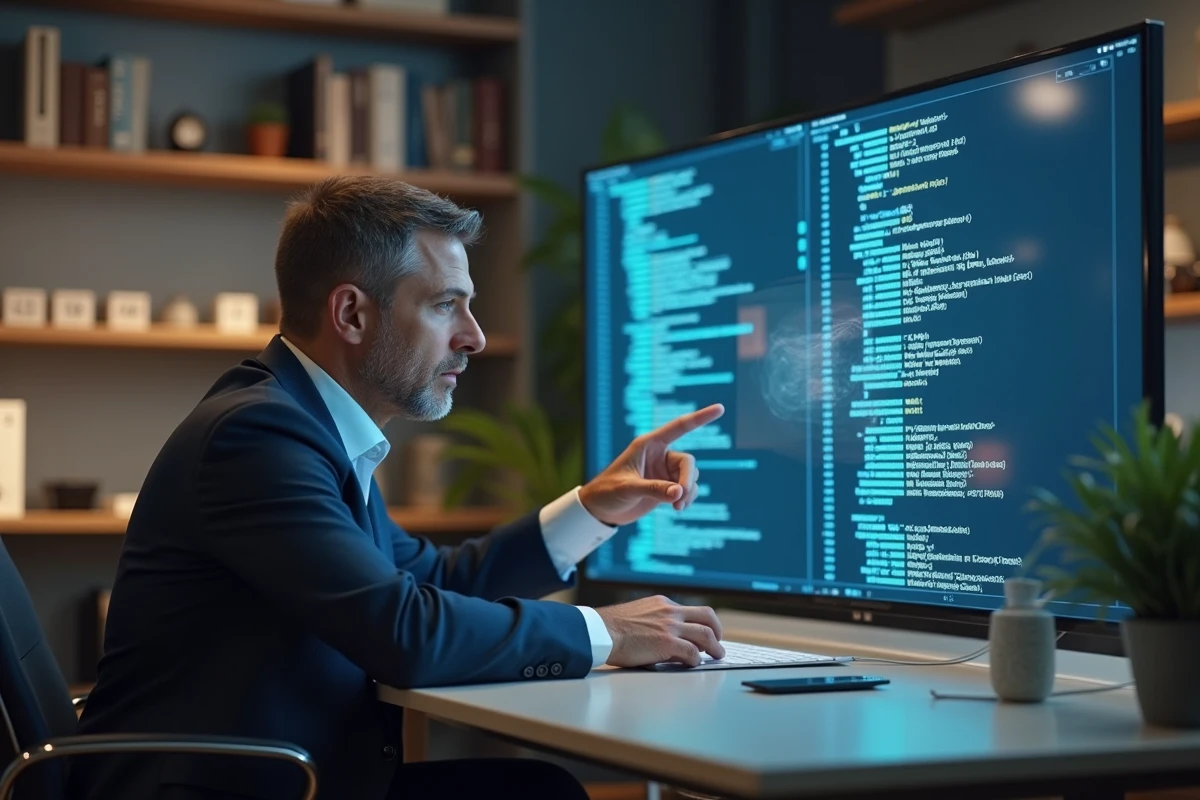
Staying alert: adapting practices at the office… and beyond
Digital transformations today leave no room for hesitation. They impose their tempo, redefining business management as well as daily routines. The integration of high-performance digital tools is essential, reshaping operational management, automation, and demanding renewed attention to data security. Modernization is permeating all levels of the organization, from top to bottom.
Preserving confidentiality is becoming a major concern, reinforced by the rigor of recent regulations. IT specialists must constantly adapt their practices to ensure compliance while maintaining a smooth user experience. With the rise of hybrid modes, everyone expects seamless collaboration, easy and secure access to cloud services, and the ability to quickly adjust tools to the real needs on the ground.
To pinpoint where current shifts are taking place, several dynamics stand out clearly:
- Rapid and profound digital transformation across all sectors.
- Constant race for competitive advantage through technical and application innovation.
- Cybersecurity established as an essential foundation for strategic decisions.
Continuing modernization and keeping pace with technological movement requires active vigilance and a keen sense of adaptation. Those who can transform this wave of innovations into a driving force will be able to maximize their potential and maintain their lead. Others risk merely observing the movement, lagging behind the pack.