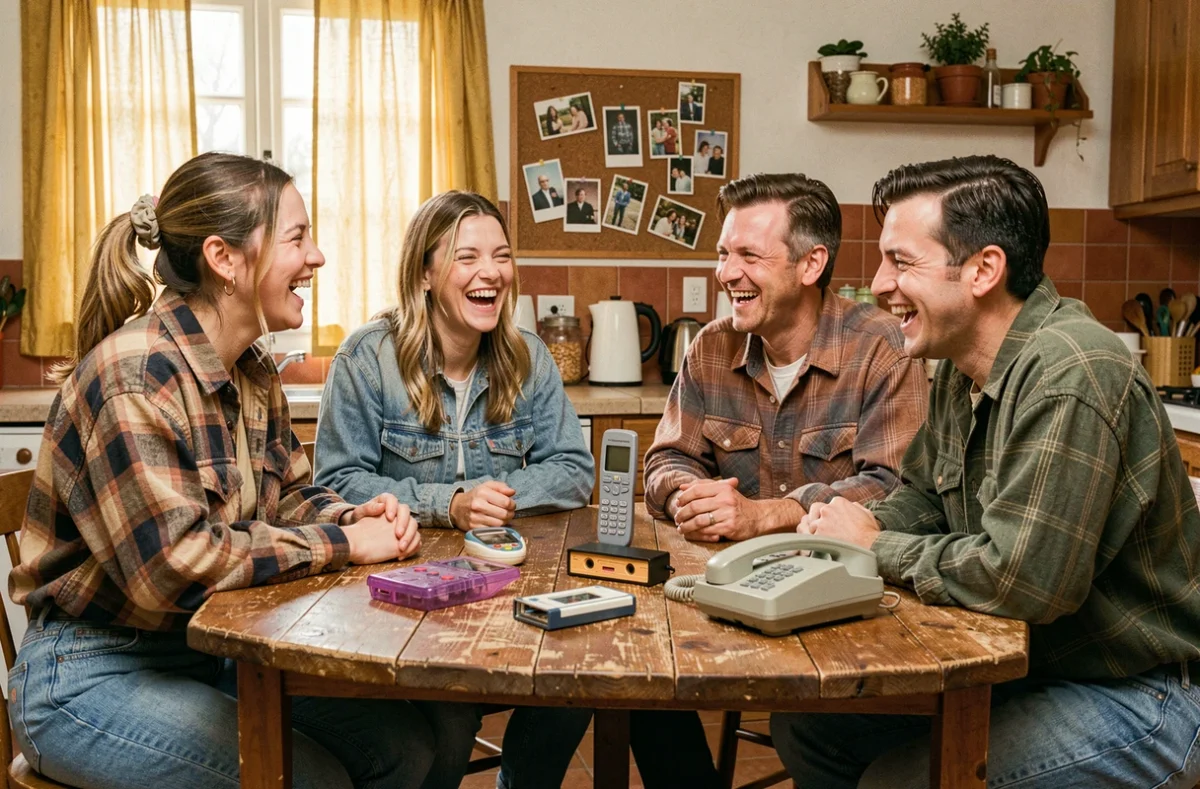
Some phrases from the ’90s work like generational passwords. Saying “c’est d’la balle” or “trop pas” in a conversation between people in their thirties or forties is enough to bring an instant smile, sometimes even a fit of laughter. These ’90s expressions, often born in school playgrounds or picked up from TV shows, send a double signal: they say something, and they prove you belonged to the same world.
The social function of ’90s expressions: above all, a marker of group identity
Most of these phrases didn’t convey any specific information. “J’en parlerai à mon cheval,” “même pas cap” or “à la one again” don’t describe anything concrete. Their real purpose lay elsewhere: to signal belonging to a group and trigger a collective reaction.
’90s playground phrases worked in exactly the same way. Saying “c’est celui qui dit qui y est” didn’t resolve any conflict, but simply saying it put the argument on hold and reaffirmed the group’s unspoken rules.
Rediscovering a ’90s youth expression is a reminder of how this works: the words mattered less than the social gesture they performed.

’90s expressions compared with today’s catchphrases: what has changed
Teen slang hasn’t disappeared; it has simply moved elsewhere. Social media, video games and music now drive the spread of expressions, whereas playgrounds and television played that role in the ’90s. The table below compares a few of the same patterns across the two eras.
| Function | ’90s expression | Modern equivalent | Main channel of circulation |
|---|---|---|---|
| Shutting someone down | “J’en parlerai à mon cheval” | “Ratio” / “Cope” | School playground → TikTok, X |
| Calling something cool | “C’est d’la balle” | “C’est bussin” / “Trop frais” | TV shows → Social media |
| Mocking someone’s fall | “Bouh, la honte” | “Cheh” | Face-to-face among peers → Stories, clips |
| Verbal trap | “Quoi ? – Feur” | “Quoi ? – Feur” (still going strong) | Playground → Online memes |
| Signaling belonging | “Prem’s !” | “First” (in a comment) | Group games → Discussion threads |
The channel of circulation has changed, but the social dynamic hasn’t. In both cases, a short, often absurd phrase spreads quickly because it serves a specific social purpose. The difference is reach: a ’90s expression could take several days to travel between schoolyards across France, whereas a term posted on TikTok can reach millions of people within hours.
’90s nostalgia: why some phrases survive and others don’t
Not all expressions have met the same fate. Some are still instantly understood thirty years later, while others have all but disappeared from everyday speech.
Three factors seem to influence whether an expression survives:
- A connection to a physical gesture or game: “Pouce !” signaled a pause in a game, while “Prem’s” settled who had won a race. Phrases tied to a physical action leave a stronger memory trace than purely verbal lines.
- Phonetic simplicity: short expressions of one or two syllables tend to last longer. “Trop” (used on its own as a superlative) has survived, while “ça déchire sa race” has faded.
- No dated cultural reference: “Ta mère en short” doesn’t refer to any TV show, film or ad. It still makes sense out of context. By contrast, a line too closely tied to a particular film or commercial loses its independence and eventually fades away.
Experts in youth language confirm that expressions don’t always disappear: they change meaning or function. A word can shift from ironic to sincere use, or move from one social network to another, picking up a different connotation along the way.
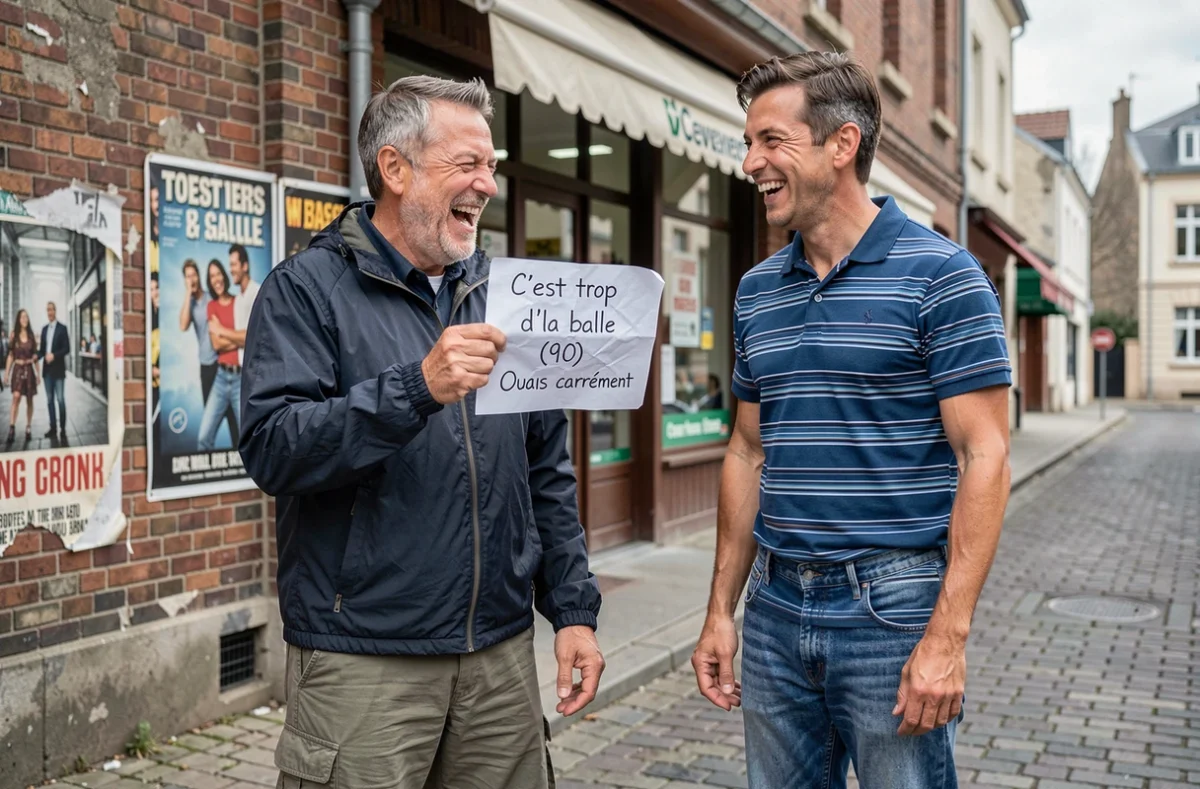
Linguistic origins of playground expressions: not just French
It would be inaccurate to reduce ’90s vocabulary to a purely French phenomenon. Several expressions borrowed from English (“cool,” “loser”), dialectal Arabic (“kiffer,” “zarma”) or multilingual urban slang. This exchange between languages is nothing new, but it has accelerated.
Everyday French has always absorbed words from elsewhere, and ’90s expressions were already a case in point. “Kiffer,” borrowed from Arabic, was everywhere in schoolyards long before it made it into the dictionary.
This linguistic openness also explains why some ’90s expressions still sound familiar to younger generations: they share the same roots as today’s vocabulary, even if their form has evolved.
’90s playground phrases don’t just tell the story of a bygone era of VHS tapes and Pogs. They document a constant pattern: every generation creates its own verbal codes to recognize one another. The words change, but their function stays the same. The smile that comes from hearing “c’est d’la balle” has less to do with the phrase itself than with the memory of belonging, for a moment, to the right group.