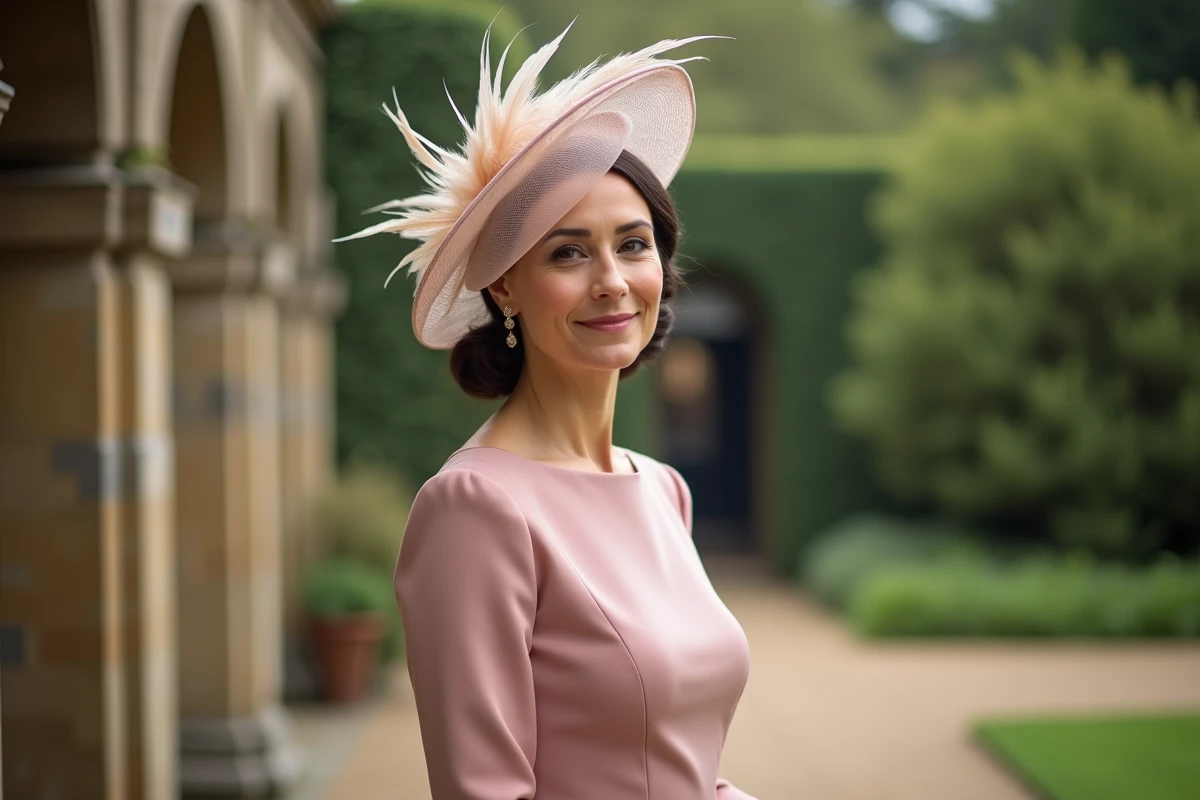
The hat worn by a guest at a wedding serves a dual purpose: a style accessory and a marker of dress code. Choosing the wrong model, the wrong brim size, or a material unsuitable for the season turns an elegant asset into a source of discomfort, both for oneself and for other guests. A few technical guidelines can help avoid common mistakes.
Hat Material and Thermal Comfort: The Criterion Most Guides Overlook
Articles on the subject extensively detail the shapes (bibi, wide-brimmed hat, fascinator) but quickly skim over the material. Yet it is the material that determines whether the hat will remain comfortable after two hours of a ceremony in full sun.
For summer weddings, especially in the South of France, braided straw, linen, and cotton are the only truly breathable materials. Polyester, plasticized satin, or synthetic organza trap heat and cause rapid sweating at the forehead and temples. It’s not just an aesthetic issue: an uncomfortable guest will remove her hat after an hour, negating all stylistic interest.
The choice of a women’s guest hat for a wedding benefits from being guided by the coherence between the material of the headwear and that of the outfit. A linen dress paired with a felt hat creates an immediate visual mismatch. Conversely, a wide-brimmed straw hat worn with a flowing cotton or viscose dress produces a cohesive silhouette.
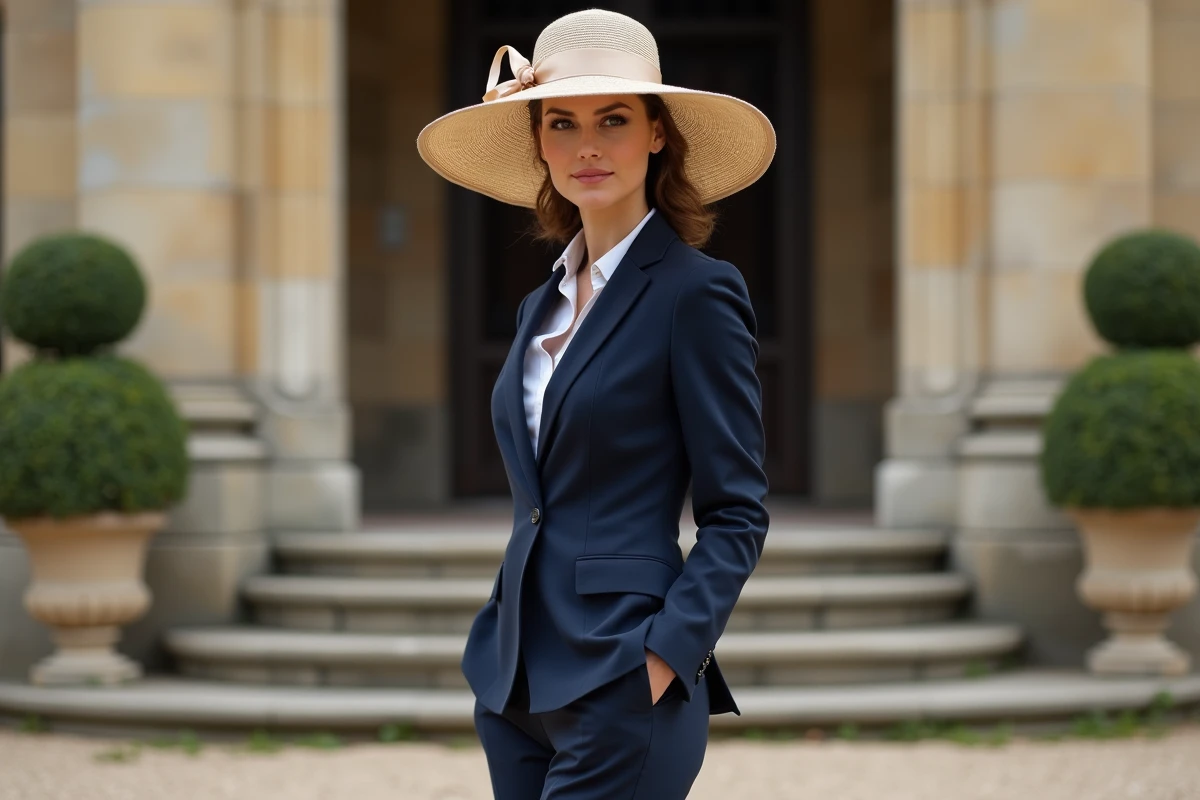
Brim Size and Etiquette: Wide-Brimmed Hat, Bibi, or Fascinator Depending on the Ceremony Venue
The width of the brim is not just a matter of taste. It raises a practical question rarely articulated: a wide-brimmed hat obstructs the visibility of the people sitting behind you.
In a church with tight rows or a town hall, a wide-brimmed hat with more than ten centimeters of brim blocks the line of sight of neighboring guests. The bibi or fascinator, fixed to the side of the head, does not pose this problem. They are suitable for indoor ceremonies, where the space between chairs is limited.
For outdoor weddings (garden, estate, beach), the wide-brimmed hat reclaims its rights. It protects from the sun and naturally complements the flowing seasonal outfits. But even outdoors, tiered seating or aligned chairs require limiting the width of the brims, especially in southern regions where brightness encourages guests to keep their hats on throughout the ceremony.
Fascinator and Bibi: Two Distinct Accessories
The fascinator is secured with a clip or comb in the hair. It often consists of a base made of sisal or felt, adorned with feathers or netting. The bibi is a small structured hat, placed on the top of the head, held in place by an elastic band or pin.
Confusion between the two is common. The difference lies in the structure: the bibi has a rigid crown, while the fascinator does not. For short hair, the bibi holds better due to its enveloping shape. The fascinator requires a sufficient anchoring point in the hair or the use of a headband.
Colors and Matching with the Dress: Rules to Follow for Ceremony Attire
The most well-known rule remains to avoid white, cream, and ivory, reserved for the bride. This also applies to the hat: a white bibi worn with a pastel dress can create a visual confusion in group photos.
- Pale tones (antique rose, lavender blue, sage green) work with most ceremony dresses without overwhelming the face
- Black remains acceptable for a formal wedding, provided the overall outfit does not resemble funeral attire (pairing with a touch of color, flowers, or a contrasting detail)
- Floral prints on the hat create a busy effect if they compete with a pattern already present on the dress: one patterned element per outfit is sufficient
The perfect match between hat and dress does not require an exact color match. A hat in a neighboring tone (two shades apart on the color wheel) yields a more sophisticated result than an identical color match, which can appear overly calculated.
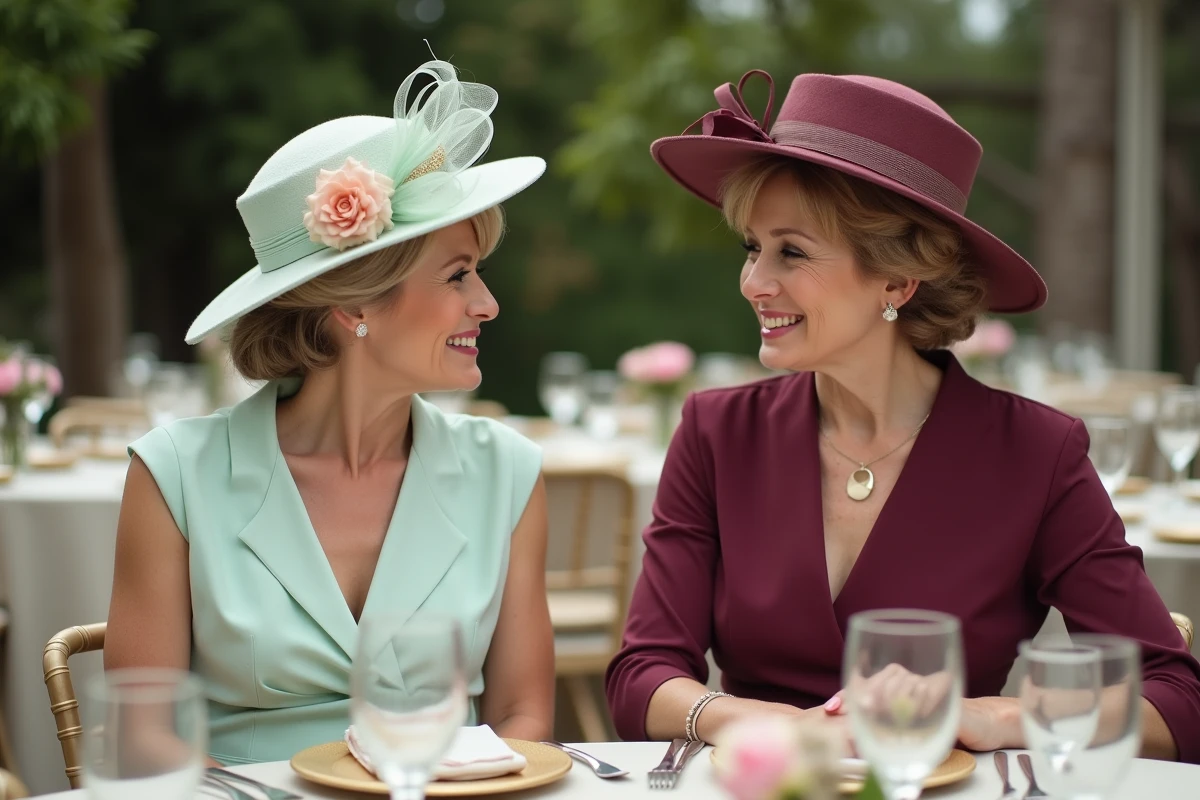
The Hat as an Alternative to Blow-Drying: An Asset for Outdoor Weddings
Wedding photographers note an underlying trend: more and more guests are choosing hats not for their formal aspect, but because they solve a concrete problem. Wind, humidity, heat, and sweating wreak havoc on elaborate hairstyles from the very first hour of an outdoor wedding.
A well-chosen hat remains photogenic regardless of weather conditions, where a sophisticated blow-dry loses its hold after a few gusts. The straw boater, short-veil bibi, or soft wide-brimmed hat allow for a polished look without touch-ups between the ceremony and dinner.
This functional approach also alters the budget: the cost of a handmade ceremony hat falls within the same range as a professional blow-dry with a prior trial. The difference is that the hat can be reused.
Securing the Hat Without Damaging the Hairstyle
- Clear hat pins hold a bibi in place without leaving visible marks in the hair
- A fabric-covered headband serves as a discreet base for a fascinator
- For a wide-brimmed hat, an adjustable inner elastic prevents the need to hold it in case of wind, freeing hands for cocktails
The final point to keep in mind is overall coherence. A ceremony hat works when it integrates into the silhouette without dominating it. If the gaze is drawn first to the hat and not to the person wearing it, the chosen model is likely too imposing for the occasion.